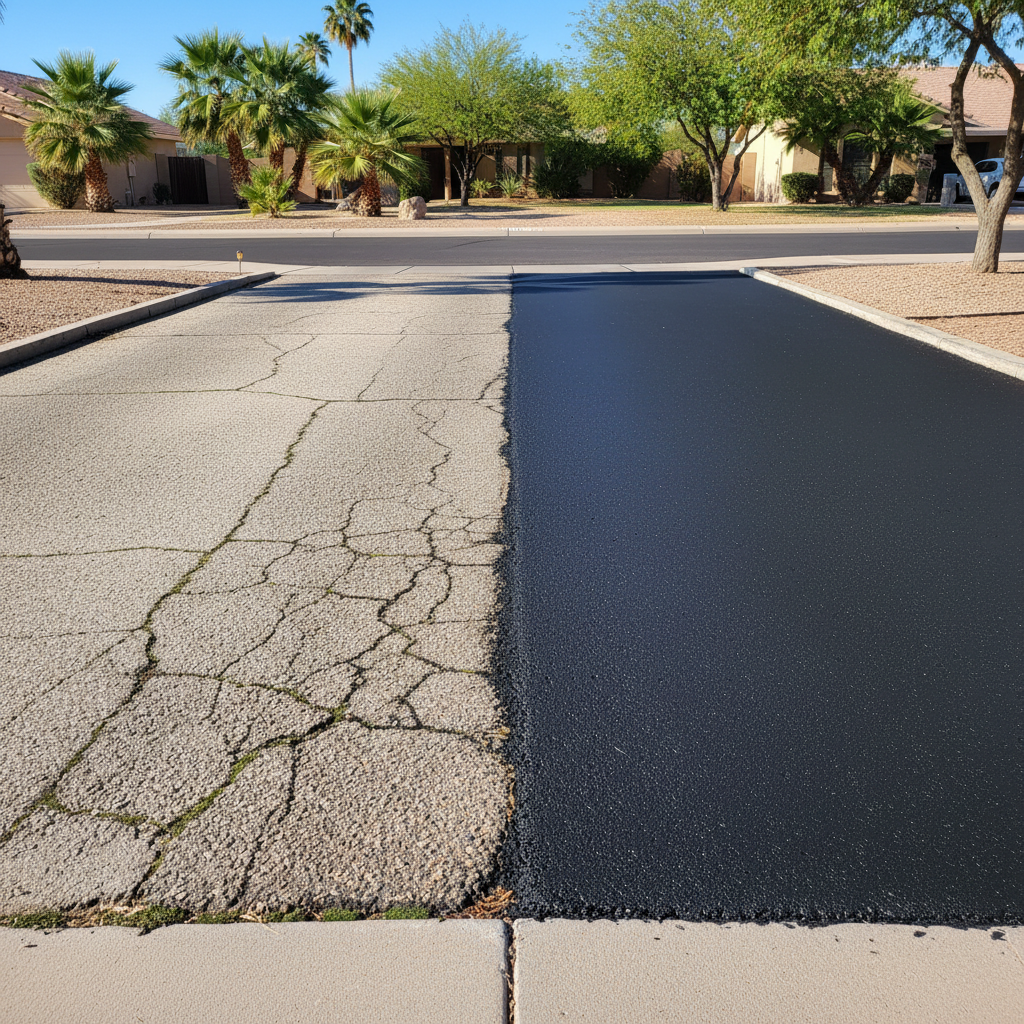
Alright, let's talk driveways. You've got an asphalt driveway that's seen better days, and you're wondering what to do. The two main options I see homeowners in Mesa grappling with are an asphalt overlay or a full depth replacement. It's not a one-size-fits-all decision, especially with our intense Arizona sun and occasional monsoon downpours. I'm going to lay out the real deal for you, no fancy marketing speak, just what I've learned from years of working on driveways right here in our community.
Asphalt Overlay: The Quick Fix?
An asphalt overlay is essentially putting a new layer of asphalt right on top of your existing one. Think of it like a fresh coat of paint, but for your driveway. Before we do that, we'll usually clean the surface, fill any significant cracks, and sometimes apply a tack coat to help the new layer bond. It's a popular choice for a few good reasons.
- Cost: This is usually the biggest draw. An overlay is almost always cheaper upfront than a full replacement. You're using less material and there's less labor involved because we're not tearing everything out.
- Speed: It's a quicker process. We can get in, get the work done, and get out, meaning less disruption for you and your family.
- Appearance: For a while, it'll look brand new. Smooth, dark, and inviting.
But here's the kicker: an overlay is only as good as what's underneath it. If your existing asphalt has widespread structural issues – we're talking major alligator cracking, big potholes, or significant heaving – an overlay isn't going to fix those underlying problems. It's just covering them up. Those cracks are likely to reflect through the new surface pretty quickly, especially with our temperature swings here in Mesa. We often see this with older homes in areas like Dobson Ranch where the original asphalt might be 30, 40 years old and has really deteriorated.
Full Depth Replacement: The Long-Term Solution
Now, a full depth replacement is exactly what it sounds like. We're tearing out the old asphalt, excavating the sub-base if needed, grading, compacting, and then laying down entirely new layers of asphalt. It's a more involved process, but it addresses everything from the ground up.
- Durability & Longevity: This is where full replacement shines. You're getting a brand new, structurally sound driveway. When done right, with proper compaction and drainage considerations, it's built to last for decades. You won't have those old cracks coming back to haunt you.
- Addressing Sub-Base Issues: If your sub-base (the dirt and gravel underneath the asphalt) is unstable or has drainage problems, a full replacement allows us to fix that. This is crucial in Arizona, where our expansive clay soils can cause a lot of movement if not properly managed.
- Appearance: It's not just a fresh top layer; it's a completely new, uniform surface from edge to edge.
The downsides? It's going to cost more upfront, and it's a longer project. You'll have your driveway out of commission for a bit longer while we do the work. But for many homeowners, the peace of mind and the extended lifespan are well worth the investment.
So, Which One Is Right For Your Mesa Driveway?
Honestly, it boils down to the condition of your existing asphalt and your budget. Here's how I usually break it down for folks:
- If your driveway has mostly minor surface cracks, fading, or shallow potholes, and the underlying structure feels solid, an overlay could be a good, cost-effective option to refresh its look and extend its life for another 5-10 years. Think of it as a maintenance step.
- If you're seeing widespread alligator cracking, significant depressions, large potholes, or areas where the asphalt is crumbling and soft, you're almost certainly looking at a full depth replacement. These are signs that the structural integrity is compromised, and an overlay would just be a band-aid. You'd be throwing good money after bad, and I wouldn't recommend it.
My recommendation, especially here in Mesa where our climate is tough on asphalt, is usually to lean towards a full depth replacement if the existing driveway is showing serious signs of structural failure. You'll get a much better return on your investment in the long run. You won't have to worry about it for 20-30 years, assuming proper maintenance like regular sealcoating. With an overlay, you might be looking at doing something again in less than a decade if those underlying issues start popping through.
The best way to figure it out is to have someone knowledgeable take a look. We at Alpha Asphalt of Mesa are always happy to come out, assess your driveway, and give you an honest opinion on what we think is the best approach for your specific situation. We'll walk you through what we see and explain why one option might be better than the other, so you can make an informed decision for your home.