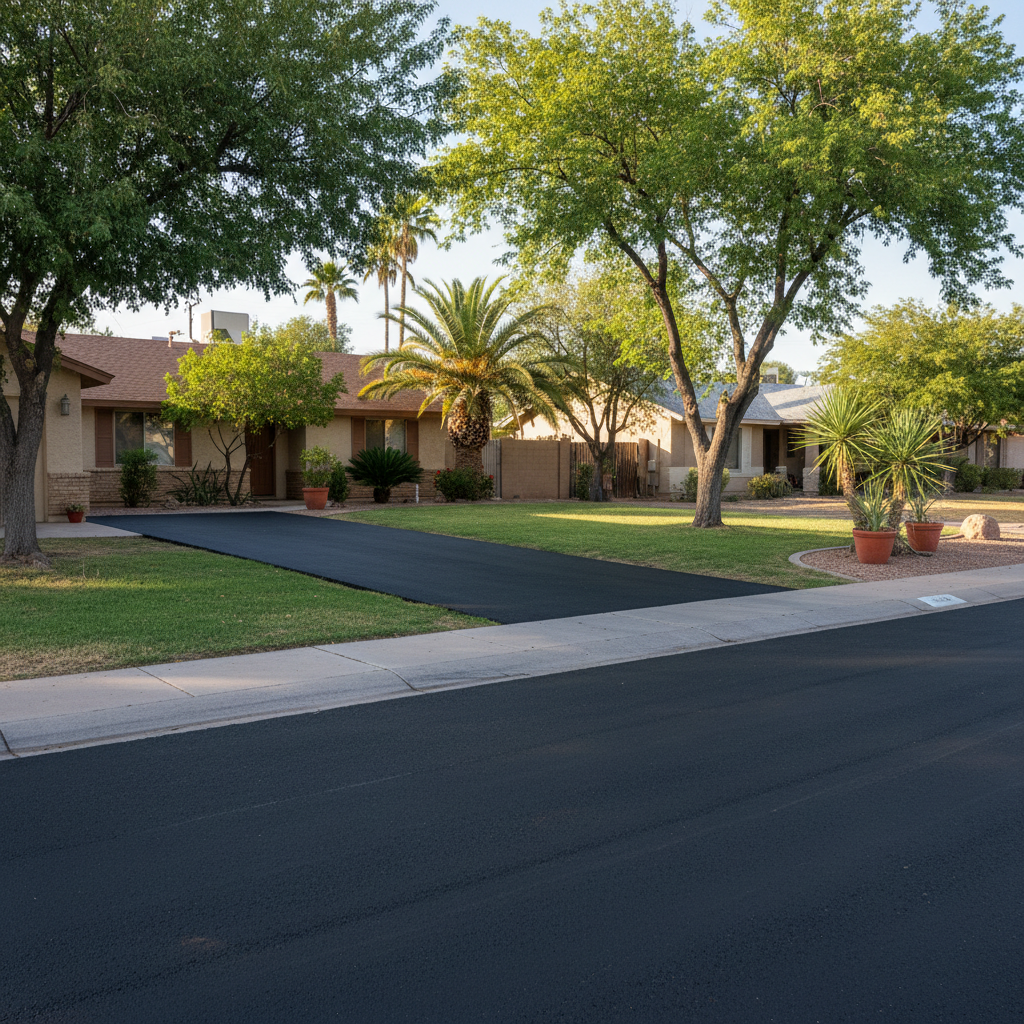
Alright, let's talk money. You're probably thinking about a new asphalt driveway or maybe fixing up an old one here in Mesa, and the first thing that pops into your head is, "What's this going to cost me?" It's a fair question, totally. And honestly, a lot of folks just give you a vague "it depends" answer. Not me. I'm going to give you some actual numbers and explain what truly drives those prices.
What Makes Asphalt Paving Costs Go Up (or Down)?
A few big things really swing the price tag on residential asphalt work. You need to get a handle on these before you even ask for a quote.
- Size of the Job: This one's pretty obvious, right? A bigger driveway means more material, more people working, and more time. A standard two-car driveway, say 20x20 feet, will cost a lot less than a winding 100-foot driveway that includes a parking pad.
- Existing Conditions: Are we talking about a brand new installation on fresh dirt? Or do we need to tear out an old, cracked concrete or asphalt driveway first? Demolition and hauling away all that old stuff definitely adds to the cost. Plus, if we're dealing with that hard caliche soil we've got all over Mesa, sometimes that means extra prep work just to get a solid base.
- Base Material: A good asphalt driveway is only as good as its foundation, period. We're talking about the aggregate base that sits underneath the asphalt. The depth and quality of this base are super important for how long it lasts, especially with our hot summers and those heavy monsoon rains. If the existing base is shot, or there isn't one, we'll need to build it up the right way.
- Asphalt Thickness: Most residential driveways around here usually get 2 to 3 inches of compacted asphalt. Going thicker costs more, sure, but it also makes it last longer. For a typical residential job, 2.5 inches compacted usually hits that sweet spot for a good balance of cost and durability.
- Drainage and Grading: Water is asphalt's arch-nemesis. If your property needs a lot of grading to make sure water runs away from your house, that's going to be part of the cost. You definitely don't want puddles just sitting on your brand new driveway, do you?
- Accessibility: Can our heavy equipment get in and out easily? If it's a really tight spot or a tricky hillside, that can bump up the labor cost a bit.
Typical Cost Ranges for Mesa Homeowners
Alright, let's get down to specifics. Remember, these are averages, and your exact price will depend on those factors I just talked about. These numbers cover a complete job, including proper base preparation, asphalt installation, and compaction.
- New Driveway Installation (Full Depth): For a standard residential driveway (let's say 400-800 square feet), you're generally looking at anywhere from $4.00 to $7.00 per square foot. So, a 600 sq ft driveway could run you $2,400 to $4,200. This price includes digging out, prepping the base, and laying 2.5-3 inches of asphalt.
- Asphalt Overlay (Paving over existing asphalt): If your existing asphalt is in decent shape but just needs a fresh surface, an overlay is a cheaper option. This usually runs about $2.50 to $4.50 per square foot. This is for adding 1.5-2 inches of new asphalt right on top of your existing, stable surface.
- Asphalt Patching/Repair: For smaller fixes, like patching potholes or cracks, it's often quoted by the job or by how much asphalt we use. You might see minimum charges for small jobs, maybe $500-$1,000, just because it still takes a crew and equipment to get out there. Bigger patches could be $10-$15 per square foot, depending on how deep and complex the repair is.
Just a heads up, these are ballpark figures. Always get a detailed quote.
What Should Be in Your Quote?
When Alpha Asphalt of Mesa gives you a quote, or any good contractor for that matter, it shouldn't just be one number. You want to see a breakdown. Here's what I always make sure to include:
- Scope of Work: A clear description of what we're doing. Is it a tear-out and replace? An overlay? Just patching?
- Square Footage: The exact area we're paving.
- Base Material: What kind of aggregate base and how deep it'll be.
- Asphalt Thickness: How many inches of asphalt we'll lay and compact.
- Grading/Drainage: Any work specifically for managing water.
- Demolition & Hauling: If we're removing old material, this cost should be separate.
- Mobilization: The cost to get our equipment and crew to your site.
- Clean-up: What we'll do to leave your property neat and tidy.
- Warranty: A clear statement of what's covered and for how long.
How to Avoid Overpaying for Your Driveway
Nobody wants to get ripped off. Here's my best advice:
- Get Multiple Quotes: This is huge. Seriously, get at least three detailed quotes from different contractors. It helps you compare apples to apples, you know?
- Check References & Reviews: Don't just take their word for it. Look up their online reviews, ask for local references, and maybe even drive by some of the jobs they've finished.
- Ask Questions: If something in the quote isn't clear, ask! A good contractor will be happy to explain it all.
- Don't Rush: Be wary of anyone pushing you for an immediate decision or offering a "today only" discount. Quality work takes planning.
- Understand the Warranty: A solid warranty shows a contractor stands behind their work. Make sure you know what it covers.
Your driveway is a big investment, and you want it done right. By understanding these costs and what goes into them, you'll be much better prepared to make a smart decision for your Mesa home.