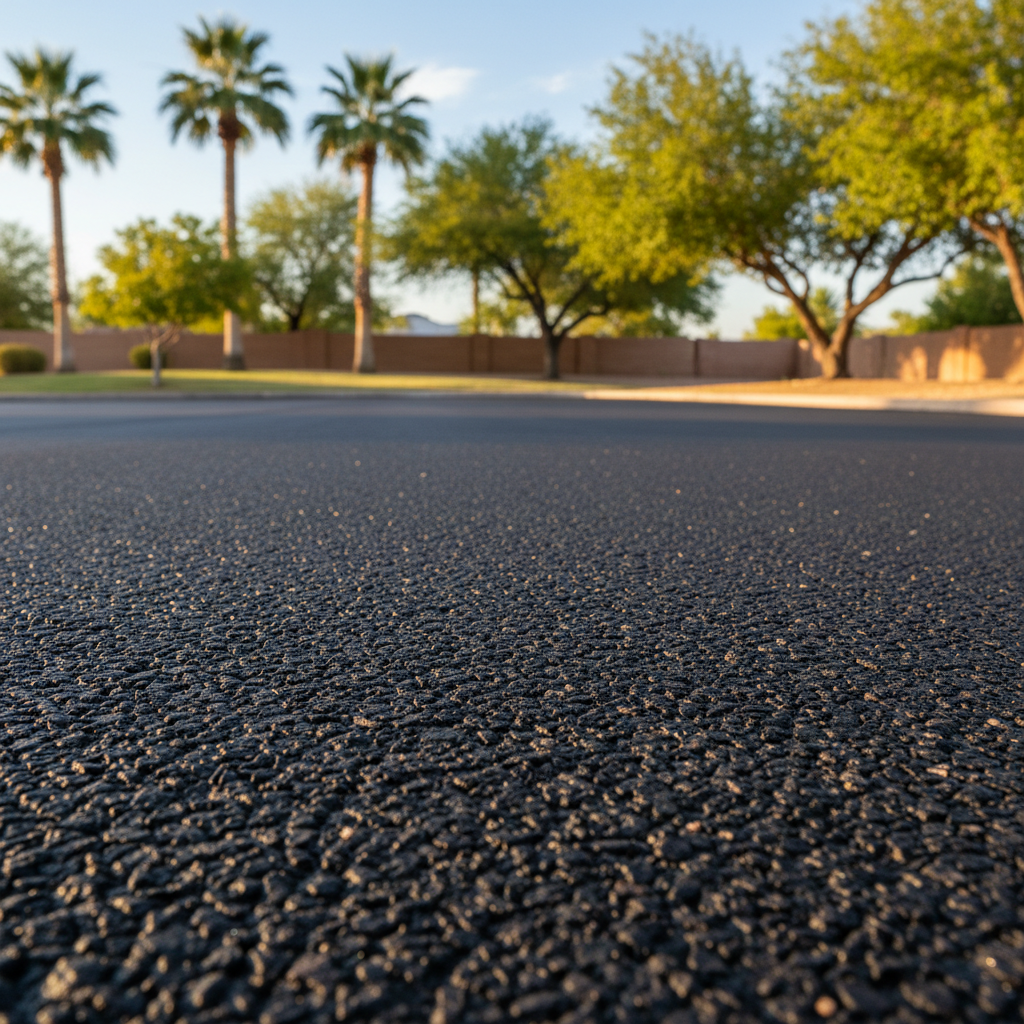
Alright, let's talk about asphalt. Not just your standard driveway, but those bigger jobs you might have on your property – maybe a long private road, a large RV pad, or even a sport court. I see homeowners around Mesa, especially in those larger properties out towards Apache Junction or Queen Creek, trying to figure out what's what with these bigger paving projects. It’s a different beast than just patching a crack in your driveway, and you really need to know what you're getting into.
Before the Shovel Hits the Dirt: Planning Your Project
First things first, you gotta plan. You wouldn't build a house without blueprints, right? Same goes for a big asphalt job. Think about what you need this paved area for. Is it for heavy vehicles? Or just light foot traffic? How much drainage do you need, especially with our monsoon rains that can really dump water fast? If you don't plan for water runoff, you'll end up with puddles and premature asphalt failure, guaranteed.
Here's what you should be thinking about:
- Permits: Depending on the size and where it is, you might need a permit from the city of Mesa or Maricopa County. Don't skip this. It's a massive headache to deal with later.
- Drainage: This is huge in Arizona. You need to direct water away from your structures and off the paved surface. That usually means grading the land properly before paving even starts.
- Subgrade: The dirt underneath? That's your foundation. If it's not stable, your asphalt won't last. We've got a lot of caliche soil here in Mesa, which can be tricky. You might need to compact it, stabilize it, or even bring in new base material.
- Budget: Be realistic. Big projects cost big money. Get a few quotes, but don't just go for the cheapest one. You're paying for quality and experience, after all.
- DIY vs. Pro: For anything beyond a small patch, you're probably looking at bringing in the pros. Laying asphalt correctly requires heavy equipment, specialized knowledge, and a whole crew. You can handle some of the prep work, like clearing brush or marking utilities, but the actual paving? That's our wheelhouse.
During the Project: What to Expect
Once you've got your plan and maybe hired a contractor, what happens next? It's not just pouring black stuff on the ground. There are several critical stages involved.
- Excavation and Grading: The crew will remove any existing material and then grade the area to make sure there are proper slopes for drainage. This is where the foundation is really set. If this isn't done right, nothing else will be.
- Base Layer Installation: This is usually crushed aggregate – rocks and gravel. It gets spread out and compacted heavily. This base layer provides strength and helps distribute the load, preventing cracks in the asphalt above. The thicker and more stable your base, the longer your asphalt will last, plain and simple.
- Asphalt Paving: This is the part everyone thinks of. Hot asphalt mix gets delivered and spread by a paver machine, then compacted immediately with heavy rollers. Temperature is key here; the asphalt needs to be hot enough to be workable but not so hot it degrades.
- Compaction: This is critical for durability. Rollers come in and compact the asphalt to achieve the right density. This makes it strong and less prone to rutting and cracking.
Your role during this? Be available for questions, make sure access is clear, and stay out of the way. Let the pros do their job. If you're doing some of the prep yourself, make sure it's done to a professional standard. Don't cut corners on compaction, for example, if you're laying your own base. You'll regret it.
After the Paving: Keeping Your Investment Solid
So, the new asphalt is down. Looks great, right? Now you need to protect that investment. It's not maintenance-free, especially not with our intense Arizona sun. Here's what you need to do:
- Curing Time: Stay off it! Seriously. Hot asphalt needs time to cure and harden. Your contractor will tell you how long, but it's usually 24-72 hours for light traffic and longer for heavy vehicles. Driving on it too soon can cause permanent damage.
- Sealcoating: This is your asphalt's sunscreen. Within 6-12 months of installation, you should get it sealcoated. Then, every 2-3 years after that, depending on traffic and sun exposure. Sealcoating protects against UV rays, water penetration, and oxidation, extending its life significantly. It's a small cost for a big return.
- Crack Sealing: As soon as you see a crack, get it sealed. Water is the enemy of asphalt. It gets into cracks, freezes (not often in Mesa, but it can happen in winter), expands, and widens the crack. Or, more commonly here, it just sits there and degrades the subgrade. Sealing cracks stops this process dead in its tracks.
- Cleaning: Keep it clean. Sweep off debris, especially after dust storms. Oil and gas spills should be cleaned up immediately, as they can break down the asphalt binder.
For most of these post-paving maintenance tasks, you can definitely do some of it yourself. Sweeping, cleaning up spills – that's easy. But for professional sealcoating and crack sealing, you'll want to call in a company like Alpha Asphalt of Mesa. We've got the right materials and equipment to do it right, ensuring your large asphalt surface stays in top shape for decades.
Look, a big asphalt project is a commitment, but when done right and maintained properly, it adds huge value and functionality to your property. Don't be afraid to ask questions, do your research, and bring in the experts when you need them. It'll save you headaches and money in the long run.